

Galvanized hex bolts are a staple in many industries, known for their durability and corrosion resistance. As a trusted supplier of [Hex Bolt Galvanized], I often encounter questions about the suitability of these bolts for high - temperature applications. In this blog post, I'll delve into the characteristics of galvanized hex bolts, examine their performance under high - temperature conditions, and provide insights to help you make an informed decision.
Understanding Galvanized Hex Bolts
Galvanized hex bolts are hex - headed bolts that have undergone a galvanization process. This process involves coating the bolts with a layer of zinc, which acts as a protective barrier against corrosion. The zinc coating sacrifices itself through a process called galvanic corrosion, preventing the underlying steel from rusting.
Galvanized hex bolts come in various standards and grades. For instance, the Hex Bolt Din 933 is a popular choice, conforming to the German DIN 933 standard. It is widely used in general engineering applications due to its standardized dimensions and reliable performance. Another option is the Hex Bolt Din 933 Cl 8.8, which belongs to the 8.8 grade. This grade indicates a high - strength bolt with a minimum tensile strength of 800 MPa and a yield strength of 640 MPa.
High - Temperature Performance of Galvanized Hex Bolts
When considering the use of galvanized hex bolts in high - temperature applications, several factors come into play.
Coating Integrity
The zinc coating on galvanized hex bolts starts to experience changes at relatively high temperatures. Zinc has a melting point of approximately 419.5°C (787.1°F). As the temperature approaches this point, the zinc coating begins to soften and may eventually melt. Once the coating melts, it loses its ability to protect the underlying steel from corrosion.
Even before reaching the melting point, high temperatures can cause the zinc coating to oxidize. Oxidation of the zinc coating leads to the formation of zinc oxide, which is a powdery substance. This oxidation not only degrades the appearance of the bolt but also reduces the effectiveness of the protective coating.
Mechanical Properties
High temperatures can also affect the mechanical properties of the steel core of the bolt. As the temperature rises, the strength and hardness of the steel generally decrease. This phenomenon, known as thermal softening, can lead to a reduction in the bolt's ability to withstand loads.
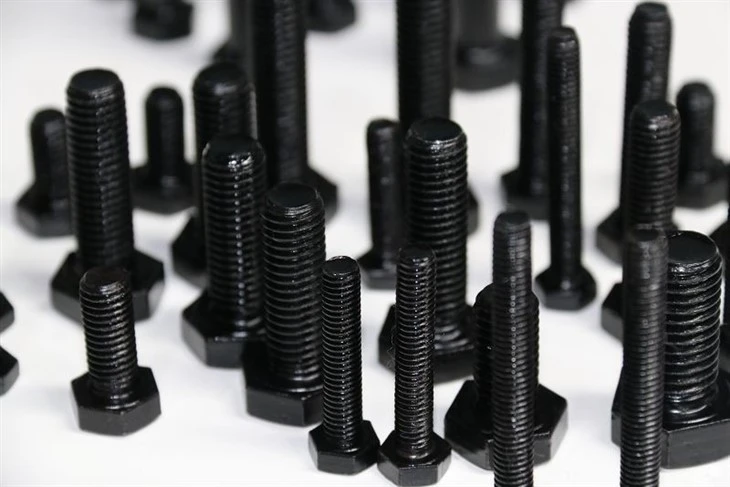

For example, in applications where the bolt is used to secure heavy components, the loss of strength at high temperatures may result in loosening or even failure of the joint. The yield strength and ultimate tensile strength of the bolt may drop significantly, compromising the integrity of the structure.
Applications Where Galvanized Hex Bolts May Be Suitable
Despite the limitations at high temperatures, there are some applications where galvanized hex bolts can still be used effectively.
Moderate Temperature Environments
In applications where the temperature remains below 200°C (392°F), galvanized hex bolts can provide reliable performance. At these temperatures, the zinc coating remains relatively stable, and the mechanical properties of the steel core are not significantly affected.
For instance, in some industrial heating systems where the external temperature is kept within this range, galvanized hex bolts can be used to assemble non - critical components. They can also be used in some outdoor applications where the temperature may rise during the day but does not exceed the safe limit.
Short - Term High - Temperature Exposure
If the high - temperature exposure is short - term, galvanized hex bolts may still be a viable option. For example, in some manufacturing processes where there are brief spikes in temperature, the bolts can withstand the heat without significant damage. However, it's important to monitor the condition of the bolts after each exposure to ensure their continued performance.
Alternatives for High - Temperature Applications
When the temperature requirements exceed the capabilities of galvanized hex bolts, alternative solutions should be considered.
Stainless Steel Bolts
Stainless steel bolts are an excellent choice for high - temperature applications. They have a much higher melting point than galvanized bolts and are more resistant to oxidation. Stainless steel bolts can maintain their strength and integrity at temperatures up to 800°C (1472°F) or even higher, depending on the grade.
High - Temperature Alloys
Bolts made from high - temperature alloys, such as Inconel or Hastelloy, are designed to withstand extreme temperatures. These alloys have excellent mechanical properties at high temperatures and are highly resistant to corrosion. However, they are generally more expensive than galvanized or stainless steel bolts.
Conclusion
In conclusion, galvanized hex bolts have their limitations when it comes to high - temperature applications. While they offer excellent corrosion resistance in normal environments, the zinc coating and the steel core can be negatively affected by high temperatures.
If you are considering using galvanized hex bolts in your project, it's crucial to assess the temperature requirements carefully. For moderate temperature applications or short - term high - temperature exposure, galvanized hex bolts can be a cost - effective solution. However, for applications with continuous high - temperature conditions, alternative options such as stainless steel or high - temperature alloy bolts should be explored.
As a supplier of [Hex Bolt Galvanized], I am committed to providing you with the best products and advice for your specific needs. If you have any questions about the suitability of our bolts for your application or need more information on alternative solutions, please feel free to contact me for a detailed discussion. We can work together to find the most appropriate fastening solution for your project.
References
- ASM Handbook Volume 1: Properties and Selection: Irons, Steels, and High - Performance Alloys.
- ASTM Standards for Fasteners.
- "Corrosion Resistance of Zinc Coatings" by NACE International.