

How is 2h Nut manufactured?
As a trusted supplier of 2h nuts, I'm excited to take you through the fascinating journey of how these essential components are manufactured. 2h nuts are widely used in various industries due to their specific design and functionality, and understanding their manufacturing process can give you a better appreciation of their quality and reliability.
Raw Material Selection
The first step in manufacturing 2h nuts is the careful selection of raw materials. The choice of material depends on the intended application of the nuts. Common materials include carbon steel, stainless steel, and alloy steel. Carbon steel is often used for general-purpose applications due to its affordability and good strength. Stainless steel, on the other hand, is preferred in environments where corrosion resistance is crucial, such as in marine or chemical industries. Alloy steel is selected when high strength and toughness are required, for example, in heavy machinery or automotive applications.
Once the appropriate material is chosen, it is sourced from reliable suppliers. The raw material should meet strict quality standards to ensure the final product's integrity. It is typically in the form of bars or coils, which are then cut into appropriate lengths for further processing.
Cold Heading
After the raw material is prepared, the next step is cold heading. Cold heading is a process where the metal is shaped at room temperature using a series of dies and punches. This process is highly efficient and can produce nuts with high precision and excellent surface finish.
The cut pieces of the raw material are fed into a cold heading machine. The machine uses a combination of pressure and force to form the basic shape of the nut. The first die shapes the blank into a cylindrical form, and subsequent dies gradually form the hexagonal shape of the nut. This process also creates the internal threads, which are an essential feature of the 2h nut.
Cold heading offers several advantages. It allows for high production rates, which is crucial for meeting large-scale demand. It also enhances the mechanical properties of the nut, such as its strength and hardness, due to the work hardening effect. Additionally, the cold heading process minimizes material waste, making it a cost - effective manufacturing method.
Threading
Once the basic shape of the nut is formed through cold heading, the next step is threading. Threading is the process of creating the helical grooves inside the nut that allow it to be screwed onto a bolt or screw.
There are two common methods of threading: cutting and rolling. Cutting involves using a cutting tool, such as a tap, to remove material and create the threads. This method is suitable for nuts with large diameters or special thread profiles. Rolling, on the other hand, is a more efficient and precise method. In thread rolling, the nut is passed between two threaded dies that roll the metal to form the threads. This method not only creates stronger threads but also improves the surface finish of the threads.
The quality of the threads is critical for the proper functioning of the 2h nut. The threads must have the correct pitch, diameter, and depth to ensure a secure fit with the corresponding bolt or screw. Quality control measures are in place during the threading process to ensure that the threads meet the required specifications.
Heat Treatment
Heat treatment is an important step in the manufacturing of 2h nuts. It is used to improve the mechanical properties of the nut, such as its hardness, strength, and toughness.
The most common heat treatment process for nuts is quenching and tempering. Quenching involves heating the nut to a specific temperature and then rapidly cooling it in a quenching medium, such as oil or water. This rapid cooling creates a hard and brittle structure. Tempering is then carried out to relieve the internal stresses created during quenching and to improve the toughness of the nut. The nut is heated to a lower temperature and held for a specific period of time before being cooled slowly.
Heat treatment is carefully controlled to ensure that the nut achieves the desired mechanical properties. The temperature, time, and cooling rate are all critical factors that can affect the final quality of the nut.
Surface Treatment
Surface treatment is applied to the 2h nut to enhance its corrosion resistance and appearance. There are several types of surface treatments available, depending on the application and the material of the nut.
One common surface treatment is zinc plating. Zinc plating involves depositing a layer of zinc on the surface of the nut through an electro - plating process. Zinc provides a sacrificial layer that protects the underlying metal from corrosion. Another option is hot - dip galvanizing, which involves dipping the nut into a bath of molten zinc. This method provides a thicker and more durable zinc coating.

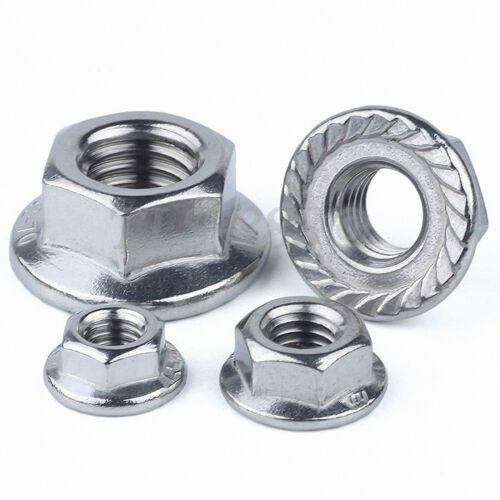
For nuts used in more demanding environments, such as those exposed to high temperatures or chemicals, other surface treatments like powder coating or passivation may be used. Powder coating involves applying a dry powder to the nut and then baking it to form a hard, protective coating. Passivation is a chemical process that removes free iron from the surface of stainless steel nuts, improving their corrosion resistance.
Quality Control
Throughout the manufacturing process, strict quality control measures are in place to ensure that the 2h nuts meet the required standards. Quality control starts from the raw material inspection and continues at every stage of the manufacturing process.
During the cold heading process, the dimensions and shape of the nuts are regularly checked using precision measuring tools, such as calipers and micrometers. The threading process is also closely monitored to ensure that the threads have the correct pitch, diameter, and depth. After heat treatment, the mechanical properties of the nuts, such as their hardness and strength, are tested using appropriate testing equipment.
In addition to in - process quality control, a final inspection is carried out before the nuts are packaged and shipped. This inspection includes a visual inspection for surface defects, as well as a functional test to ensure that the nuts can be properly screwed onto a bolt or screw.
Packaging and Shipping
Once the 2h nuts pass the quality control checks, they are ready for packaging. The nuts are typically packaged in bags, boxes, or containers, depending on the quantity and the customer's requirements. The packaging is designed to protect the nuts during transportation and storage.
Labels are attached to the packages, providing information such as the type of nut, size, material, and quantity. This information helps the customers to easily identify and use the nuts.
The packaged nuts are then shipped to the customers. We ensure that the shipping process is efficient and reliable, using reputable carriers to ensure timely delivery.
Other Types of Nuts
In addition to 2h nuts, we also supply a wide range of other nuts, such as Wing Nut Din 315, Cap Nut Din 1587, and Flange Nut Din 6923. These nuts are manufactured using similar processes but may have specific design features and applications.
Wing nuts are designed with two "wings" that allow them to be easily tightened and loosened by hand, making them ideal for applications where frequent adjustments are required. Cap nuts are used to protect the end of a bolt or screw, providing a finished appearance and preventing damage to the threads. Flange nuts have a wide flange at one end, which distributes the load over a larger area, reducing the risk of damage to the mating surface.
Contact for Procurement
If you are in need of high - quality 2h nuts or any of our other nut products, we invite you to contact us for procurement. We have a team of experts who can assist you in selecting the right nuts for your specific application. We offer competitive prices, reliable delivery, and excellent customer service. Whether you are a small business or a large industrial enterprise, we can meet your nut requirements.
References
- Groover, M. P. (2010). Fundamentals of Modern Manufacturing: Materials, Processes, and Systems. Wiley.
- ASM Handbook Committee. (1998). ASM Handbook, Volume 2: Properties and Selection: Nonferrous Alloys and Special - Purpose Materials. ASM International.