

Hey there! I'm a supplier of 2h Nut products, and today I wanna chat with you about how many types of 2h Nut products are out there.
First off, let's understand what 2h means in the context of nuts. The 2h tolerance grade is a common standard in the nut manufacturing industry. It indicates a certain level of precision and quality for the nuts. Nuts with a 2h tolerance are designed to fit well with corresponding bolts and ensure a proper and secure connection in various applications.
Now, let's dig into the different kinds of 2h Nut products. One of the most popular types is the hex - shaped nut. Hex nuts are everywhere! They're used in construction, automotive, and many other industries. The [Hex Coupling Nut Din 6334](/nuts/hex - coupling - nut - din - 6334.html) is a great example. These nuts are used to connect two bolts or threaded rods together. They have a hexagonal shape on the outside, which makes them easy to grip with a wrench. And with the 2h tolerance, you can be sure that they'll fit snugly on the bolts, providing a reliable connection.
Another common type is the flange nut. Flange nuts have a wide, flat base that acts as a washer. This design helps distribute the load more evenly when the nut is tightened, reducing the risk of damage to the surface it's being fastened to. The [Flange Nut Din 6923](/nuts/flange - nut - din - 6923.html) is a well - known 2h flange nut. It's often used in machinery and equipment where vibration is an issue. The flange helps keep the nut in place and prevents it from loosening over time.
Square nuts are also part of the 2h Nut family. [Din557 Square Nuts](/nuts/din557 - square - nuts.html) have a square shape, which gives them a different look and function compared to hex or flange nuts. They're typically used in applications where a larger surface area for contact is needed. Square nuts are often used in woodworking and some older - style machinery. The 2h tolerance on these nuts ensures that they'll match the corresponding bolts accurately, providing a stable connection.
But these are just the tip of the iceberg. There are also wing nuts, which are easy to tighten and loosen by hand. They're often used in applications where you need to make quick adjustments, like on some types of furniture or light - duty machinery. Then there are lock nuts, which are designed to resist loosening due to vibration or other forces. They come in different designs, such as nylon - inserted lock nuts and all - metal lock nuts.
In addition to the different shapes and functions, 2h Nut products also come in a variety of materials. You've got steel nuts, which are strong and durable. They're commonly used in heavy - duty applications like construction and automotive manufacturing. Stainless steel nuts are another popular choice. They're resistant to corrosion, making them ideal for outdoor or wet environments. Brass nuts are also available. They have good electrical conductivity and are often used in electrical applications.
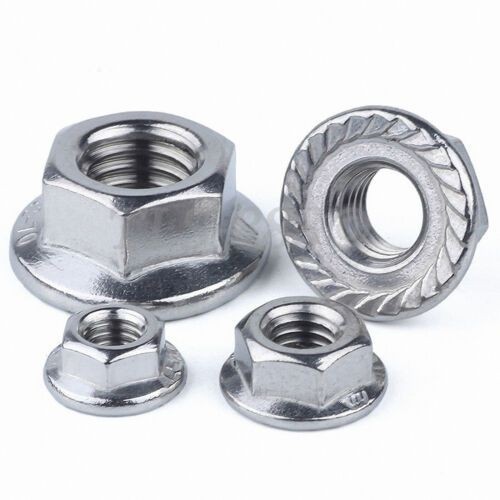

The number of 2h Nut products is truly vast when you consider all the different shapes, sizes, materials, and functions. It's impossible to give an exact count because new designs and variations are constantly being developed to meet the changing needs of different industries.
If you're in the market for 2h Nut products, whether it's for a small DIY project or a large - scale industrial application, I'm here to help. I've got a wide range of 2h Nut products in stock, and I can also source custom - made nuts if you have specific requirements.
I understand that choosing the right nut can be a bit confusing, especially with so many options available. That's why I'm more than happy to offer advice and guidance. Just tell me about your project, and I'll recommend the best 2h Nut products for you.
Don't hesitate to reach out if you're interested in purchasing 2h Nut products. Whether you need a small quantity for a home repair or a large order for your business, I'm ready to assist you. Let's have a chat about your needs, and we can work together to find the perfect nuts for your project.
References:
- Machinery's Handbook: A comprehensive reference for mechanical engineers and manufacturers, which provides detailed information on nut standards and specifications.
- Nut and Bolt Manufacturing Association publications: These resources offer industry - specific knowledge about nut production, quality control, and application.