

Hey there! I'm a supplier of Hex Bolt Din 931, and I know how crucial it is to pick the right nut for these bolts. In this blog, I'll share some tips on how to make that selection, so you can ensure a secure and long - lasting connection.
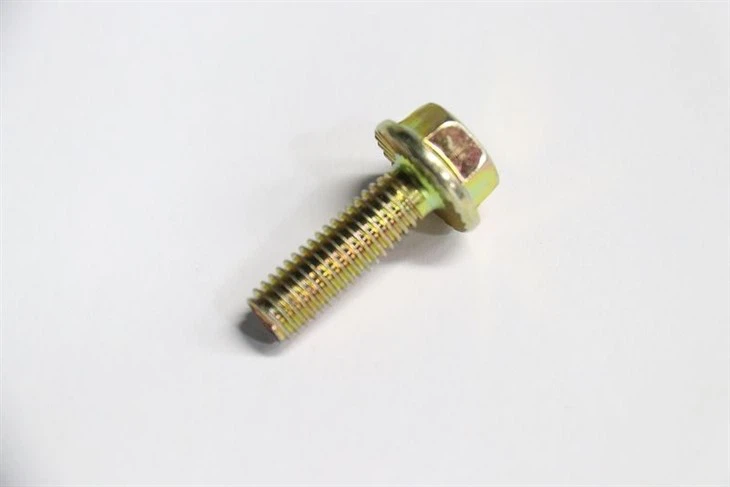
First off, let's understand what Hex Bolt Din 931 is. These are hexagonal head bolts with a metric thread, and they're widely used in various industries, from construction to machinery. The DIN 931 standard ensures a certain level of quality and dimensional accuracy. But to get the most out of these bolts, you need to pair them with the right nut.
Material Compatibility
The material of the nut should be compatible with the Hex Bolt Din 931. We usually have carbon steel, stainless steel, and alloy steel bolts. For carbon steel Hex Bolt Din 931, a carbon steel nut is a common choice. It's cost - effective and offers good strength. Carbon steel nuts can be further treated, like getting a galvanized coating for better corrosion resistance. You can check out Carbon Steel U Bolt Galvanized for more info on galvanized steel products.
Stainless steel nuts are great when you're dealing with applications where corrosion is a major concern, like in marine environments or outdoor structures. They're more expensive than carbon steel, but they offer long - term durability. Alloy steel nuts are used in high - stress applications where you need extra strength.
Thread Size and Pitch
The thread size and pitch of the nut must match the Hex Bolt Din 931. The thread size is usually specified in millimeters, like M8, M10, M12, etc. The pitch refers to the distance between adjacent threads. You can't just randomly pick a nut; it has to have the same thread size and pitch as the bolt. If the thread doesn't match, the nut won't screw onto the bolt properly, and you won't get a secure connection.
Nut Type
There are different types of nuts available, and each has its own advantages.
Hex Nuts
Hex nuts are the most common type. They have a hexagonal shape, which makes them easy to grip with a wrench. They're suitable for general - purpose applications. You can use them in construction projects, machinery assembly, and even in DIY projects at home.
Lock Nuts
Lock nuts are designed to prevent loosening due to vibration. They have a special feature, like a nylon insert or a deformed thread, that creates extra friction and keeps the nut in place. If you're working on a machine that vibrates a lot, like an engine or a compressor, lock nuts are a must. You can find high - quality lock nuts in the form of High Strength Din 6921 Cl 8.8.
Wing Nuts
Wing nuts are easy to tighten and loosen by hand, thanks to their two wings. They're often used in applications where you need to make frequent adjustments, like in some furniture or light - duty machinery.
Strength Requirements
The strength of the nut should match the strength of the Hex Bolt Din 931. Bolts are usually rated according to their tensile strength, and the nut should be able to withstand the same amount of force. For example, if you're using a high - strength bolt, you need a high - strength nut. Using a weak nut with a strong bolt can lead to the nut failing under stress, which can be dangerous.
Environmental Conditions
The environment where the bolt and nut will be used also plays a role in the selection. If it's a wet or humid environment, you need to consider corrosion - resistant materials. As I mentioned earlier, stainless steel or galvanized carbon steel are good options. In a high - temperature environment, you need to make sure the material of the nut can withstand the heat without losing its strength.
Size and Clearance
You also need to consider the size of the nut in relation to the application. If there's limited space, you might need a thinner or smaller nut. And make sure there's enough clearance around the nut for the wrench to fit and tighten it properly. Sometimes, using a regular hex nut might not be possible due to space constraints, and you might have to go for a low - profile nut.
Cost Considerations
Cost is always a factor. While you don't want to compromise on quality, you also don't want to overspend. Carbon steel nuts are generally the most affordable option, followed by stainless steel and then alloy steel. You need to balance the cost with the performance requirements of your application.
Quality and Certification
When buying nuts for your Hex Bolt Din 931, make sure they meet the relevant standards. Look for nuts that have proper certifications, which ensure that they've been tested and meet the required quality levels. A certified nut gives you peace of mind that it will perform as expected.
Compatibility with Other Components
The nut should also be compatible with other components in the assembly. For example, if you're using washers, the nut should work well with them. The washer can help distribute the load evenly and prevent damage to the surface. You can also check out Carbon Steel L Bolt Galvanized for more related products that might be used in conjunction with your bolts and nuts.

In conclusion, selecting the right nut for Hex Bolt Din 931 is not a simple task. You need to consider factors like material compatibility, thread size, nut type, strength requirements, environmental conditions, size, cost, quality, and compatibility with other components. As a supplier of Hex Bolt Din 931, I can help you make the right choice. If you're looking for high - quality nuts and bolts for your project, don't hesitate to reach out for a purchase negotiation. I'm here to assist you in getting the best products for your needs.
References
- Machinery's Handbook, 31st Edition
- DIN 931 Standard Documentation