

As a supplier of Bolt Grade 4.8, ensuring the quality of our products is of utmost importance. Bolt Grade 4.8 is a common type of bolt used in various industries, and its quality directly affects the safety and reliability of the structures or equipment it is used in. In this blog, I will share some effective methods on how to test the quality of Bolt Grade 4.8.
Visual Inspection
The first step in testing the quality of Bolt Grade 4.8 is a visual inspection. This is a simple yet crucial process that can reveal many potential issues.
- Surface Finish: Check the surface of the bolt for any signs of cracks, scratches, or pits. A smooth and uniform surface finish is an indication of good manufacturing quality. Cracks can significantly reduce the strength of the bolt and may lead to failure under load. Scratches and pits can act as stress concentrators, increasing the risk of fatigue failure over time.
- Thread Quality: Examine the threads carefully. The threads should be well - formed, with consistent pitch and depth. Any signs of damaged or incomplete threads can affect the bolt's ability to engage properly with the nut, leading to improper tightening and reduced clamping force.
- Head and Neck: Inspect the bolt head and the area where the head meets the shank. The head should be of the correct shape and size, and there should be no signs of deformation or cracking. The transition between the head and the shank should be smooth to avoid stress concentrations.
Dimensional Measurement
Accurate dimensional measurement is essential to ensure that the Bolt Grade 4.8 meets the required specifications.
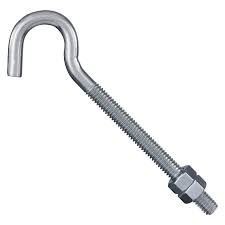

- Diameter: Measure the diameter of the bolt shank at several points along its length using a micrometer or a caliper. The measured diameter should be within the specified tolerance range. Deviations from the standard diameter can affect the fit of the bolt in the hole and the clamping force it can generate.
- Length: Measure the overall length of the bolt from the underside of the head to the end of the shank. Similar to the diameter, the length should be within the specified tolerance. Incorrect length can lead to improper assembly and reduced performance.
- Thread Pitch: Use a thread pitch gauge to measure the pitch of the threads. The thread pitch must match the specified value for the Bolt Grade 4.8. An incorrect thread pitch can prevent the bolt from mating properly with the nut.
Hardness Testing
Hardness is an important property of Bolt Grade 4.8 as it is related to the bolt's strength and resistance to deformation.
- Rockwell or Brinell Hardness Test: These are common methods for testing the hardness of bolts. A small indentation is made on the surface of the bolt using a specific indenter under a known load. The size of the indentation is then measured, and the hardness value is determined based on a standard scale. For Bolt Grade 4.8, the hardness should fall within a certain range as specified by the relevant standards. If the hardness is too low, the bolt may deform easily under load; if it is too high, the bolt may become brittle and prone to cracking.
Tensile Testing
Tensile testing is one of the most important tests for evaluating the strength of Bolt Grade 4.8.
- Test Setup: A bolt is placed in a tensile testing machine, and a gradually increasing axial load is applied until the bolt fails. During the test, the load and the corresponding elongation of the bolt are recorded.
- Yield Strength and Tensile Strength: From the test data, the yield strength and the tensile strength of the bolt can be determined. The yield strength is the stress at which the bolt begins to deform plastically, while the tensile strength is the maximum stress the bolt can withstand before breaking. For Bolt Grade 4.8, the yield strength is typically around 320 MPa, and the tensile strength is around 400 MPa. If the measured values are significantly lower than the specified values, it indicates a quality problem with the bolt.
Chemical Composition Analysis
The chemical composition of Bolt Grade 4.8 affects its mechanical properties.
- Spectroscopic Analysis: This method uses a spectrometer to determine the elemental composition of the bolt. The main elements in Bolt Grade 4.8 include carbon, manganese, silicon, and sulfur. The content of these elements should be within the specified range. For example, an appropriate carbon content is necessary to achieve the desired strength, while excessive sulfur can reduce the bolt's ductility and increase the risk of cracking.
Fatigue Testing
In many applications, bolts are subjected to cyclic loading, which can lead to fatigue failure.
- Test Procedure: A bolt is subjected to a repeated load at a specific frequency and amplitude. The number of cycles the bolt can withstand before failure is recorded. This test helps to evaluate the bolt's resistance to fatigue. For Bolt Grade 4.8, the fatigue life should meet the requirements of the application. If the bolt fails prematurely under cyclic loading, it may be due to factors such as poor material quality, surface defects, or improper heat treatment.
As a reliable supplier of Bolt Grade 4.8, we conduct these tests rigorously to ensure that our products meet the highest quality standards. In addition to Bolt Grade 4.8, we also offer a wide range of other bolts, such as High Strength Hex Bolt Din 933 Cl 8.8, Hex Bolt Galvanized, and Hook Bolt Zinc Plated.
If you are in need of high - quality bolts for your projects, we invite you to contact us for procurement and further discussion. We are committed to providing you with the best products and services.
References
- ASTM International. ASTM standards related to bolts and fasteners.
- ISO standards for mechanical properties of fasteners.
- Machinery's Handbook, which contains comprehensive information on bolt design and testing.