

As a supplier of Bolt Grade 10.9, I often get asked about the chemical composition of these high - strength fasteners. Understanding the chemical makeup of Bolt Grade 10.9 is crucial for engineers, manufacturers, and anyone involved in the construction or mechanical industries. In this blog post, I'll break down the key elements that make up Bolt Grade 10.9 and explain how they contribute to the bolt's performance.
The Basics of Bolt Grade 10.9
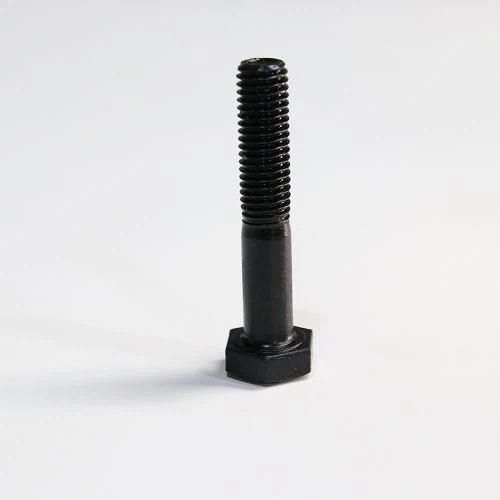
Bolt Grade 10.9 is a high - strength bolt commonly used in applications where high tensile strength and reliable performance are required. The "10" in the grade indicates the nominal tensile strength in units of 100 MPa, and the "0.9" represents the ratio of the yield strength to the tensile strength. This means that a Grade 10.9 bolt has a minimum tensile strength of 1000 MPa and a minimum yield strength of 900 MPa.
Chemical Composition of Bolt Grade 10.9
Carbon (C)
Carbon is one of the most important elements in the composition of Bolt Grade 10.9. It typically ranges from 0.38% to 0.45%. Carbon increases the hardness and strength of the steel. As the carbon content rises, the steel becomes stronger but also more brittle. In Bolt Grade 10.9, the carefully controlled carbon content provides the necessary strength while maintaining a reasonable level of ductility. Higher carbon content allows the bolt to withstand high - stress applications without deforming easily.
Silicon (Si)
Silicon is usually present in the range of 0.15% to 0.35%. It acts as a deoxidizer during the steel - making process, helping to remove oxygen from the molten steel. This results in a cleaner, more uniform steel structure. Silicon also contributes to the strength and hardness of the bolt. It enhances the resistance to oxidation and improves the overall mechanical properties of the steel.
Manganese (Mn)
Manganese is added in the range of 0.60% to 1.00%. It serves multiple purposes. Firstly, it combines with sulfur to form manganese sulfide (MnS), which helps to reduce the harmful effects of sulfur in the steel. Sulfur can cause brittleness and poor machinability. Secondly, manganese increases the hardenability of the steel, allowing it to achieve the desired strength and toughness during heat treatment.
Phosphorus (P) and Sulfur (S)
These elements are considered impurities in the steel, and their content is strictly limited. Phosphorus is typically restricted to a maximum of 0.035%, and sulfur to a maximum of 0.035%. High levels of phosphorus and sulfur can lead to embrittlement and poor weldability. By keeping their content low, the quality and performance of the Bolt Grade 10.9 are ensured.
Chromium (Cr)
Chromium is often present in small amounts, usually up to 0.20%. It improves the corrosion resistance of the bolt. In environments where the bolt may be exposed to moisture or chemicals, chromium helps to form a protective oxide layer on the surface of the steel, preventing rust and corrosion. It also contributes to the hardenability and strength of the steel.
Molybdenum (Mo)
Molybdenum is added in the range of 0.15% to 0.25%. It enhances the hardenability and high - temperature strength of the steel. Molybdenum helps to refine the grain structure of the steel, which improves the toughness and fatigue resistance of the bolt. In high - stress applications where the bolt may experience cyclic loading, molybdenum plays a crucial role in preventing fatigue failure.
How the Chemical Composition Affects Performance
The combination of these elements in the specific ranges mentioned above gives Bolt Grade 10.9 its unique properties. The high - strength characteristics make it suitable for use in critical applications such as automotive engines, heavy machinery, and structural steel connections. The balanced chemical composition ensures that the bolt can withstand high tensile and shear forces without breaking or deforming.
For example, in automotive engines, Bolt Grade 10.9 is used to secure engine components. The high strength of the bolts is necessary to hold the engine parts together under the extreme pressures and vibrations generated during operation. The corrosion - resistant properties provided by elements like chromium and silicon ensure that the bolts remain reliable over a long period, even in harsh engine environments.
Our Product Range and Related Links
As a supplier of Bolt Grade 10.9, we also offer a wide range of other high - quality bolts. If you are interested in different types of bolts, you can check out our High Strength Hex Bolt Din 931 Cl 8.8, Carbon Steel Stud Bolt, and Carbon Steel Hex Bolt Din 933. These products are manufactured with the same high - quality standards and strict quality control processes as our Bolt Grade 10.9.
Contact Us for Procurement
If you are in need of Bolt Grade 10.9 or any of our other bolt products, we invite you to contact us for procurement. Our team of experts is ready to assist you with your specific requirements, whether it's a small - scale project or a large - scale industrial application. We can provide detailed product information, offer competitive pricing, and ensure timely delivery.
References
- ASME B18.2.1 - 2011, "Square and Hex Bolts and Screws (Inch Series)"
- ISO 898 - 1:2013, "Mechanical properties of fasteners made of carbon steel and alloy steel - Part 1: Bolts, screws and studs with specified property classes - Coarse thread and fine pitch thread"