

Hey there! As a supplier of Hex Bolt Galvanized, I often get asked about all sorts of technical details regarding our products. One question that pops up quite a bit is, "What is the coefficient of friction of galvanized hex bolts?" Well, let's dive right into it.
First off, let's understand what the coefficient of friction actually means. In simple terms, it's a value that represents how much two surfaces resist sliding against each other. For galvanized hex bolts, this coefficient is crucial because it affects how well the bolt can be tightened and how much pre - load it can maintain.
Galvanization is a process where a layer of zinc is applied to the surface of the hex bolt. This layer not only protects the bolt from corrosion but also has an impact on its friction characteristics. The zinc coating can change the surface roughness and hardness of the bolt, which in turn affects the coefficient of friction.
The coefficient of friction for galvanized hex bolts can vary depending on several factors. One of the main factors is the type of galvanization used. There are two common types: hot - dip galvanizing and electro - galvanizing.

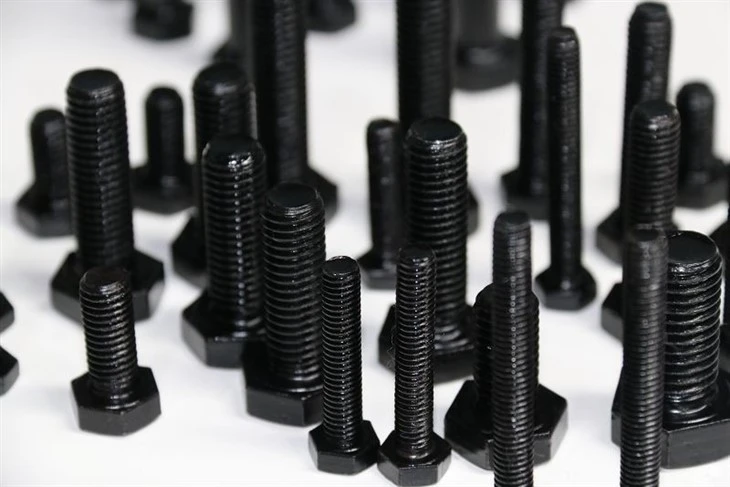
Hot - dip galvanizing involves dipping the bolts into a bath of molten zinc. This results in a relatively thick zinc coating, which can be anywhere from 40 to 100 microns. The surface of a hot - dip galvanized bolt is often rougher compared to an electro - galvanized one. The roughness can increase the coefficient of friction, as there are more surface irregularities for the mating surfaces to interact with.
On the other hand, electro - galvanizing uses an electrochemical process to deposit a thin layer of zinc, usually around 5 to 15 microns. The surface of an electro - galvanized bolt is smoother, which generally leads to a lower coefficient of friction.
Another factor that affects the coefficient of friction is the surface condition of the mating parts. If the nut or the surface where the bolt is being tightened is dirty, oily, or has some form of debris on it, the coefficient of friction can change significantly. For example, oil can act as a lubricant, reducing the friction between the bolt and the nut, making it easier to turn but also reducing the pre - load that the bolt can maintain.
The grade of the bolt also plays a role. Higher - grade bolts, like Hex Bolt Din 931 Cl 8.8, are made from stronger materials and may have different surface properties compared to lower - grade bolts. The manufacturing process for higher - grade bolts can result in a more consistent surface finish, which can have an impact on the coefficient of friction.
Now, what about the actual values of the coefficient of friction for galvanized hex bolts? Well, it's not a one - size - fits - all answer. In general, for hot - dip galvanized bolts, the coefficient of friction can range from 0.15 to 0.25. For electro - galvanized bolts, it can be lower, typically in the range of 0.1 to 0.15. But these are just rough estimates, and the actual value can vary based on the factors we discussed earlier.
Why is knowing the coefficient of friction so important? When you're using galvanized hex bolts in a construction or mechanical application, you need to ensure that the bolts are tightened to the correct torque. The torque required to tighten a bolt is directly related to the coefficient of friction. If you don't account for the correct coefficient of friction, you might end up either under - tightening or over - tightening the bolt.
Under - tightening can lead to the bolt coming loose over time, which can compromise the integrity of the structure or machine. Over - tightening, on the other hand, can cause the bolt to break or damage the mating parts.
At our company, we understand the importance of providing accurate information about the coefficient of friction for our galvanized hex bolts. That's why we conduct thorough testing on our products to determine the most accurate coefficient of friction values. We also offer different types of galvanized hex bolts, such as Hex Bolt Din 933 Full Thread and Hex Bolt Din 933, to meet the diverse needs of our customers.
If you're in the market for high - quality galvanized hex bolts, you need to consider all these factors related to the coefficient of friction. Whether you're working on a small DIY project or a large - scale industrial application, getting the right bolts with the appropriate friction characteristics is crucial.
We're here to help you make the right choice. Our team of experts can provide you with detailed information about the coefficient of friction for our different types of galvanized hex bolts. We can also offer advice on how to correctly tighten the bolts based on the specific application.
If you have any questions or are interested in purchasing our galvanized hex bolts, don't hesitate to reach out. We're always ready to assist you in finding the perfect solution for your needs. Let's start a conversation about how our products can fit into your project and ensure its success.
References
- Machinery's Handbook, 31st Edition
- Standards for Fasteners in Construction, ASTM International