

Hey there! As a supplier of Bolt Grade 8.8, I often get asked all sorts of questions about these bolts. One question that's come up a bit lately is, "What is the specific heat capacity of Bolt Grade 8.8?" Well, let's dive into this topic and break it down.
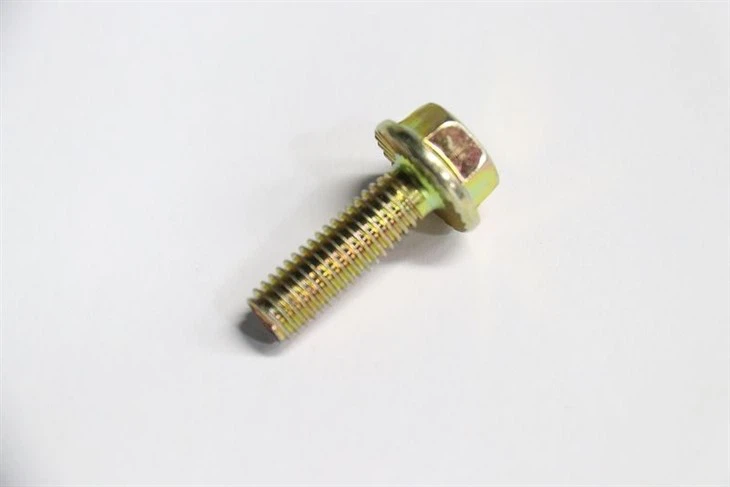
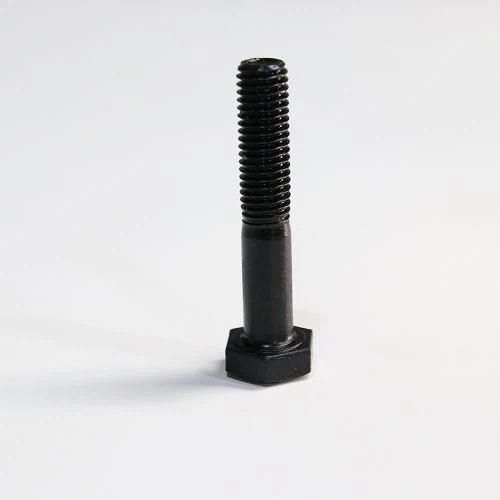
First off, let's talk a bit about what Bolt Grade 8.8 is. Grade 8.8 bolts are high - strength fasteners commonly used in a wide range of industries, from automotive to construction. They're known for their excellent tensile strength and durability. You can find different types of Grade 8.8 bolts, like the Hex Bolt Din 931, High Strength Din 6921 Cl 8.8, and High Strength Hex Bolt Din 931 Cl 8.8. These bolts are made from medium carbon steel that's been quenched and tempered, which gives them their high - strength properties.
Now, onto the specific heat capacity. Specific heat capacity is the amount of heat energy required to raise the temperature of a unit mass of a substance by one degree Celsius (or Kelvin). It's an important property because it helps us understand how a material will respond to changes in temperature.
For Bolt Grade 8.8, which is mainly made of steel, the specific heat capacity is approximately 460 J/(kg·K). This value is based on the general properties of medium - carbon steel, which is the primary material for these bolts. But it's important to note that this is an average value. The actual specific heat capacity can vary a bit depending on the exact composition of the steel and any additional heat - treatment processes it's undergone.
Why does the specific heat capacity matter for Bolt Grade 8.8 bolts? Well, in applications where the bolts are exposed to high temperatures, like in engines or industrial furnaces, understanding the specific heat capacity can help engineers design systems that won't cause the bolts to fail due to thermal stress. When a bolt is heated, it expands. If the temperature change is too rapid or too extreme, the expansion can cause the bolt to lose its pre - load or even break. By knowing the specific heat capacity, engineers can calculate how much heat the bolt can absorb before it reaches a critical temperature.
Let's say you're using Grade 8.8 bolts in an automotive engine. The engine generates a lot of heat, and the bolts need to withstand these high temperatures without losing their strength. The specific heat capacity helps in determining how well the bolts can handle the heat and how long they'll last under those conditions.
Another aspect where specific heat capacity is relevant is during the manufacturing process. When the bolts are being quenched and tempered, the heat - treatment process involves heating and cooling the bolts at specific rates. The specific heat capacity of the steel affects how quickly the bolts heat up and cool down, which in turn affects their final properties, like hardness and tensile strength.
In addition to the specific heat capacity, there are other thermal properties of Bolt Grade 8.8 that are important. Thermal conductivity, for example, is the ability of a material to conduct heat. Steel has a relatively high thermal conductivity, which means that heat can transfer through the bolt quickly. This can be both an advantage and a disadvantage. On one hand, it helps in equalizing the temperature within the bolt during heat - treatment. On the other hand, in applications where you want to insulate the bolt from heat, the high thermal conductivity can be a problem.
Now, let's talk about how we ensure the quality of our Bolt Grade 8.8 products. At our company, we have a strict quality control process. We start by carefully selecting the raw materials. We source high - quality medium - carbon steel from reliable suppliers. Then, during the manufacturing process, we closely monitor the heat - treatment parameters to ensure that the bolts have the right properties, including the correct specific heat capacity.
We also conduct a series of tests on the finished bolts. Tensile tests are used to measure the strength of the bolts, and hardness tests are done to check the hardness. We also test the bolts for corrosion resistance, especially if they're going to be used in outdoor or harsh environments.
If you're in the market for Bolt Grade 8.8, whether it's Hex Bolt Din 931, High Strength Din 6921 Cl 8.8, or High Strength Hex Bolt Din 931 Cl 8.8, we're here to help. We can provide you with high - quality bolts that meet your specific requirements. Whether you need a small quantity for a DIY project or a large order for an industrial application, we've got you covered.
If you have any questions about our products, or if you're interested in starting a procurement process, don't hesitate to reach out. We're always happy to have a chat and see how we can assist you in getting the right Bolt Grade 8.8 for your needs.
In conclusion, the specific heat capacity of Bolt Grade 8.8 is an important property that affects its performance in various applications. By understanding this property, engineers and users can make better decisions about how to use these bolts. And as a supplier, we're committed to providing high - quality products that meet the highest standards.
References:
- Materials Science textbooks on steel properties
- Industry standards for high - strength bolts