

What is the strength grade of Cap Nut Din 1587?
As a dedicated supplier of Cap Nut Din 1587, I am often asked about the strength grade of these essential fasteners. Understanding the strength grade of Cap Nut Din 1587 is crucial for various industries, as it directly impacts the safety and reliability of the applications in which they are used. In this blog post, I will delve into the details of the strength grade of Cap Nut Din 1587, shedding light on its significance and how it can influence your choice of fasteners.
The Basics of Cap Nut Din 1587
Before we dive into the strength grade, let's first understand what Cap Nut Din 1587 is. Cap nuts, also known as domed nuts, are a type of fastener with a rounded top that covers the end of a bolt or screw. The DIN 1587 standard specifies the dimensions, tolerances, and technical requirements for these cap nuts. They are commonly used in applications where a finished appearance is desired, as well as to protect the threads of the bolt from damage, corrosion, and dirt.
Understanding Strength Grades
Strength grades are used to classify fasteners based on their mechanical properties, specifically their tensile strength and yield strength. Tensile strength refers to the maximum amount of stress a fastener can withstand before breaking, while yield strength is the stress at which a fastener begins to deform permanently. These properties are essential in determining the suitability of a fastener for a particular application.
For Cap Nut Din 1587, the strength grade is typically indicated by a marking on the nut itself. This marking consists of numbers and sometimes letters, which provide information about the fastener's material and strength properties. The most common strength grades for cap nuts include 4.6, 4.8, 5.8, 8.8, 10.9, and 12.9.
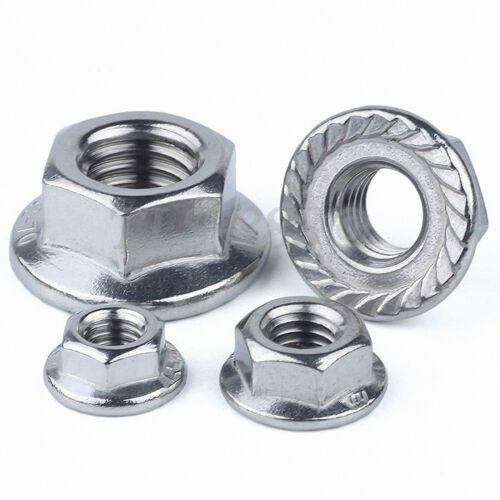

- Grade 4.6: Cap nuts of this grade are made from low - carbon steel. They have a minimum tensile strength of 400 MPa and a yield strength of 240 MPa. Grade 4.6 cap nuts are suitable for light - duty applications where the load requirements are not very high.
- Grade 4.8: Similar to grade 4.6, grade 4.8 cap nuts are also made from low - carbon steel. However, they have a higher yield strength of 320 MPa, with a minimum tensile strength of 400 MPa. They are commonly used in general engineering applications.
- Grade 5.8: These cap nuts are made from medium - carbon steel. They have a minimum tensile strength of 500 MPa and a yield strength of 400 MPa. Grade 5.8 cap nuts are suitable for medium - duty applications where a higher level of strength is required.
- Grade 8.8: Made from medium - carbon alloy steel, grade 8.8 cap nuts have a minimum tensile strength of 800 MPa and a yield strength of 640 MPa. They are widely used in automotive, machinery, and structural applications.
- Grade 10.9: Cap nuts of this grade are made from alloy steel and are heat - treated to achieve high strength. They have a minimum tensile strength of 1000 MPa and a yield strength of 900 MPa. Grade 10.9 cap nuts are used in heavy - duty applications where high strength and reliability are crucial.
- Grade 12.9: The highest strength grade for cap nuts, grade 12.9, is made from alloy steel with a very high carbon content. They have a minimum tensile strength of 1200 MPa and a yield strength of 1080 MPa. These cap nuts are used in extremely demanding applications, such as aerospace and high - performance machinery.
Choosing the Right Strength Grade
Selecting the appropriate strength grade for Cap Nut Din 1587 depends on several factors, including the application, the load requirements, and the environmental conditions. For example, in a light - duty application such as a furniture assembly, a grade 4.6 or 4.8 cap nut may be sufficient. On the other hand, in a heavy - duty industrial application where high loads and vibrations are present, a grade 8.8, 10.9, or 12.9 cap nut would be more appropriate.
It is also important to consider the compatibility of the cap nut with the bolt or screw it will be used with. The strength grade of the nut should generally match or exceed that of the bolt to ensure proper performance and prevent premature failure.
Other Related Nuts
In addition to Cap Nut Din 1587, there are other types of nuts that may be used in various applications. For example, Nylon Lock Nut Din 985 Din 982 are designed to prevent loosening due to vibration. These nuts have a nylon insert that provides a locking mechanism. Another type is the Flange Nut Din 6923, which has a wide flange at the base that distributes the load over a larger area, reducing the risk of damage to the mating surface. The Wing Nut Din 315 is a type of nut with two "wings" that allow for easy hand - tightening and loosening, making it suitable for applications where frequent adjustments are required.
Conclusion
In conclusion, understanding the strength grade of Cap Nut Din 1587 is essential for ensuring the safety and reliability of your applications. By choosing the right strength grade based on the load requirements, environmental conditions, and compatibility with other fasteners, you can optimize the performance of your projects. As a supplier of Cap Nut Din 1587, I am committed to providing high - quality fasteners that meet the diverse needs of my customers. If you are in the market for Cap Nut Din 1587 or other types of nuts, I invite you to contact me for a detailed discussion about your requirements. Whether you need light - duty or heavy - duty fasteners, I can offer you the right solutions at competitive prices.
References
- DIN 1587 Standard Specification
- Fastener Handbook, ASME International