

Can Cap Nut Din 1587 be used in food - processing equipment?
As a supplier of Cap Nut Din 1587, I often encounter questions from customers regarding the suitability of these nuts for various applications, especially in food - processing equipment. This blog aims to delve into the key factors and considerations to determine whether Cap Nut Din 1587 can indeed be used in this specialized environment.
Material Compatibility
One of the most crucial aspects when considering the use of Cap Nut Din 1587 in food - processing equipment is the material of the nut. In food - processing, safety and hygiene are of utmost importance. The materials used must be non - toxic, resistant to corrosion, and able to withstand regular cleaning and sanitization processes.
Cap Nut Din 1587 is typically available in different materials such as stainless steel, brass, and carbon steel. Stainless steel is often the preferred choice for food - processing applications. It has excellent corrosion resistance, which is essential as food - processing environments can be humid and may involve exposure to various chemicals used in cleaning and sanitization. For example, 304 and 316 grades of stainless steel are commonly used in the food industry. 316 stainless steel, in particular, contains molybdenum, which enhances its resistance to pitting and crevice corrosion, making it suitable for more aggressive food - processing conditions.
On the other hand, brass may not be as suitable for long - term use in food - processing equipment. Although it has good machinability, brass can react with certain food acids and may release copper ions, which can be a concern for food safety. Carbon steel is also generally not recommended for direct contact with food due to its susceptibility to rusting, which can contaminate the food products.
Hygiene and Cleanability
Food - processing equipment must be easy to clean to prevent the growth of bacteria and other microorganisms. Cap Nut Din 1587 should have a design that allows for thorough cleaning. The cap design of these nuts can be both an advantage and a potential drawback.
The cap provides some protection to the threads, preventing the accumulation of debris and food particles in the threads. However, it also creates a cavity that can potentially trap food residues if not designed properly. A well - designed cap nut should have smooth surfaces and no sharp corners or crevices where food can get stuck. It is also important that the nut can be easily disassembled and reassembled during the cleaning process.
Regular cleaning and sanitization are standard procedures in food - processing facilities. Cap Nut Din 1587 should be able to withstand the use of common cleaning agents such as alkaline and acidic detergents, as well as high - pressure water jets. If the nut material is not resistant to these cleaning agents, it may corrode or degrade over time, leading to potential food contamination.
Mechanical Performance
In addition to material and hygiene considerations, the mechanical performance of Cap Nut Din 1587 is also vital in food - processing equipment. These nuts need to provide a secure fastening to ensure the stability and proper functioning of the equipment.
Food - processing equipment often operates under various mechanical stresses, such as vibration, shock, and torque. Cap Nut Din 1587 should have sufficient strength and durability to withstand these forces without loosening or failing. The thread quality of the nut is crucial for a proper fit and secure fastening. A high - quality cap nut will have well - formed threads that can engage smoothly with the corresponding bolts or studs.
Moreover, the cap nut should be able to maintain its performance over a long period of time. In a food - processing environment, equipment may run continuously for extended periods, and the nuts need to be able to handle the constant mechanical loads without wearing out prematurely.
Regulatory Compliance
The food industry is highly regulated, and any components used in food - processing equipment must comply with relevant regulations. In the United States, the Food and Drug Administration (FDA) has strict guidelines regarding the materials and substances that can come into contact with food. In the European Union, the European Food Safety Authority (EFSA) sets similar standards.
Cap Nut Din 1587 used in food - processing equipment must meet these regulatory requirements. This includes ensuring that the materials used are food - grade and do not pose any health risks to consumers. Suppliers should be able to provide documentation such as material certificates and compliance statements to prove that their products meet the necessary standards.

Comparison with Other Nuts
When considering the use of Cap Nut Din 1587 in food - processing equipment, it is also useful to compare it with other types of nuts. For example, Hex Nut Din 934 is a common type of nut used in many industrial applications. Hex nuts have a simple hexagonal shape and are easy to install and remove. However, they do not have the protective cap of Cap Nut Din 1587, which means that the threads are more exposed to food residues and debris.
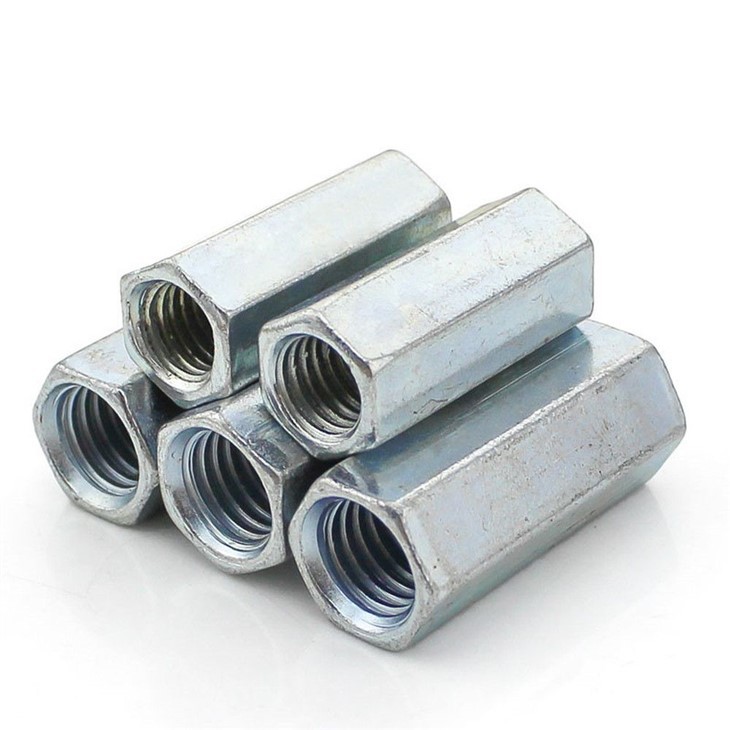
Hex Coupling Nut Din 6334 is used to connect two threaded rods or studs. While it provides a strong connection, its design may not be as suitable for food - processing equipment in terms of hygiene. The internal cavity of the coupling nut can be difficult to clean thoroughly.
Nylo n Lock Nut Din 985 Din 982 is a self - locking nut that uses a nylon insert to prevent loosening due to vibration. However, the nylon insert may not be suitable for high - temperature food - processing applications, as the nylon can melt or degrade at elevated temperatures.
Conclusion
In conclusion, Cap Nut Din 1587 can be used in food - processing equipment, but several factors need to be carefully considered. The material of the nut, especially stainless steel, should be chosen to ensure food safety and corrosion resistance. The design of the nut should facilitate easy cleaning and maintain hygiene standards. It must also meet the mechanical performance requirements of the equipment and comply with relevant regulatory standards.
If you are in the food - processing industry and are looking for high - quality Cap Nut Din 1587 that meets all these requirements, we are here to help. Our company has a wide range of Cap Nut Din 1587 products made from the best materials and manufactured to the highest standards. We can provide you with detailed product information and technical support to ensure that you make the right choice for your food - processing equipment. Contact us today to start a procurement discussion and find the perfect solution for your needs.
References
- "Food Safety Modernization Act (FSMA)" - U.S. Food and Drug Administration
- "Regulation (EC) No 1935/2004 on materials and articles intended to come into contact with food" - European Union
- Machinery Design Handbook for Food Processing Equipment