

As a supplier of Hex Nut Din 934, I've had the privilege of witnessing firsthand the performance and quality of these nuts in various industrial applications. In this blog post, I'll delve into how the quality of Hex Nut Din 934 compares to other standards, exploring their features, advantages, and limitations.
Understanding Hex Nut Din 934
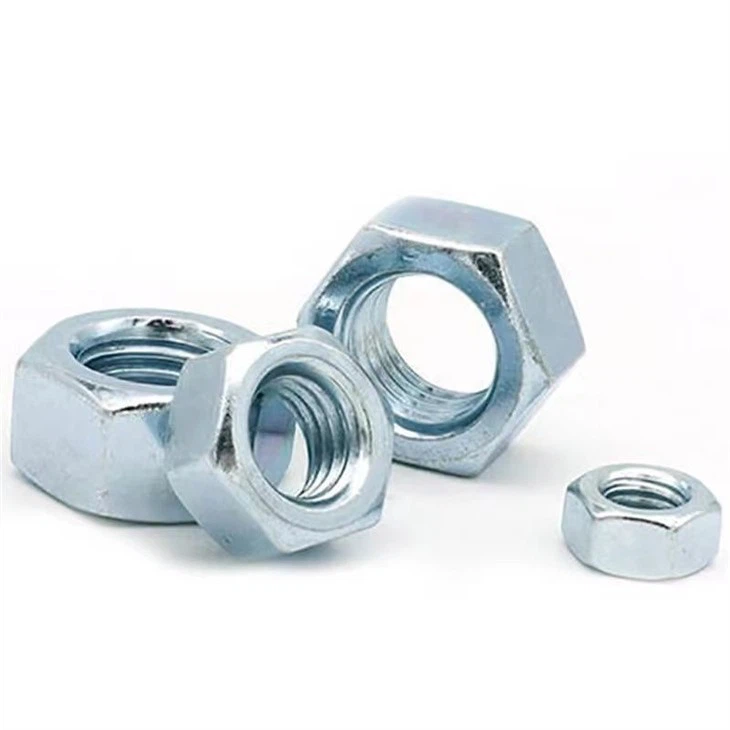
Before we embark on the comparison, let's first understand what Hex Nut Din 934 is. The DIN 934 standard is a German specification for hexagon nuts with a plain finish. These nuts are widely used in mechanical engineering, automotive, and general construction due to their simple design and reliable performance. They are typically made from carbon steel, stainless steel, or brass, offering a range of material options to suit different environmental and load requirements.
One of the key features of Hex Nut Din 934 is its precise dimensional accuracy. The standard defines strict tolerances for the nut's size, pitch, and thread profile, ensuring a proper fit with corresponding bolts and screws. This precision is crucial for maintaining the integrity of the joint and preventing loosening or failure under vibration or load.
Comparing with Flange Nut Din 6923
Flange Nut Din 6923 is another popular type of nut used in industrial applications. Unlike the Hex Nut Din 934, the Flange Nut Din 6923 has a built - in flange at the base, which acts as a washer. This design provides a larger bearing surface, distributing the load more evenly over the mating surface and reducing the risk of damage to the connected parts.
In terms of quality, both nuts meet high - quality standards. However, the application scenarios often determine which one is more suitable. The Hex Nut Din 934 is more versatile and can be used in a wider range of applications where a simple, compact nut is required. On the other hand, the Flange Nut Din 6923 is preferred in applications where a larger bearing surface is needed, such as in thin - walled materials or when dealing with soft surfaces.
In terms of manufacturing, both standards require high - precision machining to ensure proper thread engagement and dimensional accuracy. However, the Flange Nut Din 6923's more complex design may require additional manufacturing steps, which can potentially increase the cost.
Comparing with Hex Coupling Nut Din 6334
Hex Coupling Nut Din 6334 is designed to connect two threaded rods or bolts together. It has internal threads on both ends, allowing for a continuous connection. In contrast, the Hex Nut Din 934 is used to secure a bolt or screw against a surface.
The quality of the Hex Coupling Nut Din 6334 lies in its ability to provide a strong and reliable connection between two threaded components. It needs to have excellent thread strength and alignment to ensure a proper fit and prevent loosening. The Hex Nut Din 934, while also having good thread strength, is focused on providing a secure fastening against a single surface.
In terms of material selection, both nuts can be made from similar materials such as carbon steel, stainless steel, or brass. However, the Hex Coupling Nut Din 6334 may require higher - strength materials in applications where it needs to withstand significant tensile forces.
Quality Assurance of Hex Nut Din 934
As a supplier of Hex Nut Din 934, we take quality assurance very seriously. Our manufacturing process starts with the selection of high - quality raw materials. We source our materials from trusted suppliers and conduct strict incoming inspections to ensure they meet the required specifications.
During the manufacturing process, we use advanced machining techniques and equipment to ensure precise dimensional accuracy. Our production lines are equipped with state - of - the - art CNC machines, which can produce nuts with high repeatability and accuracy. After machining, each nut undergoes a series of quality control checks, including dimensional inspection, thread inspection, and hardness testing.
We also perform surface treatment processes such as galvanizing, passivation, or blackening to enhance the nut's corrosion resistance. This is especially important for applications in harsh environments where the nut may be exposed to moisture, chemicals, or other corrosive agents.
Advantages of Hex Nut Din 934
One of the main advantages of Hex Nut Din 934 is its simplicity. Its straightforward design makes it easy to install and remove, reducing the time and effort required for assembly and maintenance. Additionally, its wide availability in the market means that it can be easily sourced, which is beneficial for both small - scale and large - scale projects.
The standardization of the DIN 934 also ensures compatibility with a wide range of bolts and screws. This means that customers can use these nuts with confidence, knowing that they will fit properly with other components in their systems.
Limitations of Hex Nut Din 934
Despite its many advantages, the Hex Nut Din 934 also has some limitations. Its relatively small bearing surface may not be suitable for applications where a large amount of load needs to be distributed over a wide area. In such cases, a Flange Nut Din 6923 or a washer may need to be used in conjunction with the Hex Nut Din 934.
Another limitation is its susceptibility to loosening under high - vibration conditions. While proper installation techniques and the use of locking devices can mitigate this issue, it is still a consideration in applications where vibration is a major concern.
Conclusion
In conclusion, the quality of Hex Nut Din 934 is high, and it offers a reliable and cost - effective solution for many industrial applications. When compared to other standards such as Flange Nut Din 6923 and Hex Coupling Nut Din 6334, it has its own unique features, advantages, and limitations.

If you are in the market for high - quality nuts, I encourage you to consider our Hex Nut Din 934. Our commitment to quality and customer satisfaction ensures that you will receive products that meet your requirements. Whether you are working on a small DIY project or a large - scale industrial application, we can provide the right nuts for your needs. If you have any questions or would like to discuss your specific requirements, please feel free to reach out. We look forward to the opportunity to work with you on your next project.
References
- DIN 934 Standard Documentation
- DIN 6923 Standard Documentation
- DIN 6334 Standard Documentation
- Engineering Handbook of Fasteners