

When it comes to fasteners, understanding the differences between various types is crucial for ensuring the proper functioning and longevity of your projects. As a supplier of Flange Nut Din 6923, I often encounter questions about how these specialized nuts differ from regular nuts, especially in terms of installation. In this blog post, I'll delve into the unique features of Flange Nut Din 6923 and contrast them with regular nuts during the installation process.
Understanding Flange Nut Din 6923 and Regular Nuts
Before we discuss the installation differences, let's briefly understand what Flange Nut Din 6923 and regular nuts are. Flange Nut Din 6923 is a type of nut that has a built - in flange at one end. This flange acts as a washer, distributing the load over a larger area and providing better resistance to loosening. The DIN 6923 standard specifies the dimensions, tolerances, and material requirements for these nuts, ensuring high - quality and interchangeability.
On the other hand, regular nuts come in various forms, such as hex nuts (like Hex Nut Din 934), square nuts, and wing nuts (like Wing Nut Din 315). They are typically used in combination with a separate washer to distribute the load and prevent damage to the mating surface.
Installation Space and Alignment
One of the significant differences in installation between Flange Nut Din 6923 and regular nuts lies in the space requirements. Since Flange Nut Din 6923 has an integrated flange, it eliminates the need for an additional washer. This means that less space is needed around the nut for installation. In applications where space is limited, such as in compact machinery or electronic devices, Flange Nut Din 6923 can be a more practical choice.
When it comes to alignment, the flange on Flange Nut Din 6923 provides a self - centering feature. This makes it easier to align the nut with the bolt during installation. Regular nuts, especially when used with a separate washer, may require more careful alignment to ensure that the washer sits flat against the mating surface and the nut threads onto the bolt correctly. Misalignment during installation can lead to uneven loading, which may cause premature failure of the fastener or the connected components.
Torque Application
Torque application is a critical aspect of nut installation, as it determines the clamping force between the connected parts. Flange Nut Din 6923 and regular nuts may have different torque requirements due to their design differences.
The integrated flange of Flange Nut Din 6923 increases the friction between the nut and the mating surface. As a result, when applying torque, more force is needed to tighten the nut compared to a regular nut of the same size. It's important to follow the manufacturer's torque specifications for Flange Nut Din 6923 to ensure that the proper clamping force is achieved without over - tightening, which could damage the nut or the bolt.
Regular nuts, when used with a separate washer, may have slightly lower friction coefficients. However, the torque requirements can vary depending on the type of washer used. For example, a plain washer may have a different friction characteristic compared to a lock washer (such as Nylon Lock Nut Din 985 Din 982). When installing regular nuts, it's essential to consider the combined effect of the nut, washer, and the material of the mating surface on the torque requirements.
Vibration Resistance
In applications where vibration is a concern, such as automotive engines or industrial machinery, the installation of the right nut can significantly impact the fastener's performance. Flange Nut Din 6923 offers better vibration resistance compared to regular nuts.
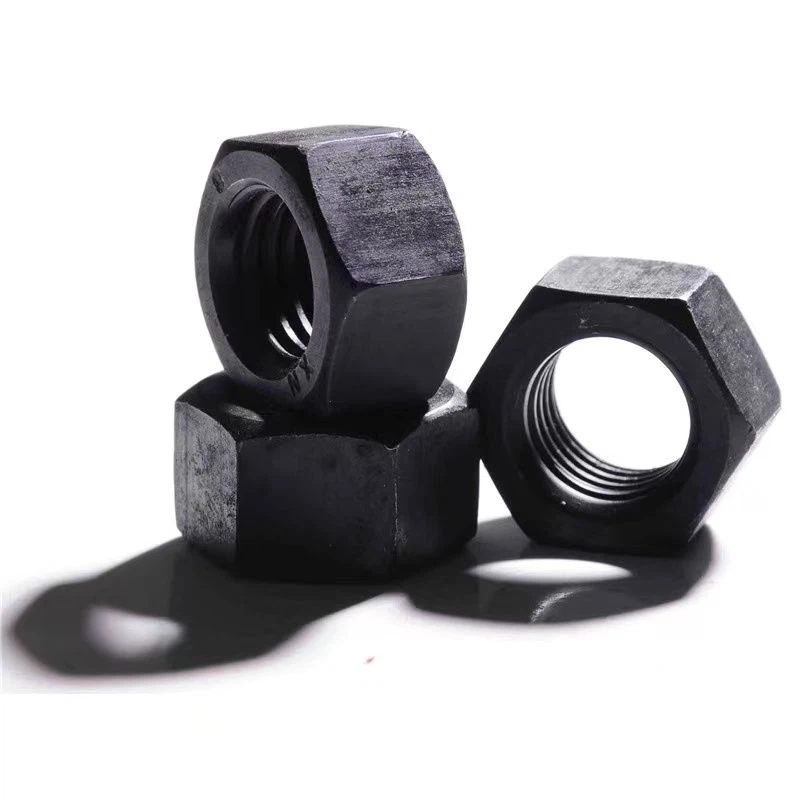

The flange on Flange Nut Din 6923 acts as a locking mechanism, reducing the likelihood of the nut loosening due to vibration. During installation, the flange creates a larger contact area with the mating surface, which increases the frictional force and helps to keep the nut in place. Regular nuts, especially those without a locking feature, may require additional measures, such as using a lock washer or thread - locking compound, to prevent loosening under vibration.
When installing Flange Nut Din 6923 in a vibrating environment, it's important to ensure that the nut is tightened to the correct torque. This will maximize the vibration - resistance properties of the nut. For regular nuts, proper installation of the additional locking devices is crucial to achieve the same level of vibration resistance.
Installation Speed
In some production environments, installation speed can be a significant factor. Flange Nut Din 6923 can potentially be installed more quickly than regular nuts in certain situations.
Since Flange Nut Din 6923 combines the functions of a nut and a washer, there is no need to handle and position a separate washer during installation. This can save time, especially in high - volume production settings. Workers can simply pick up the Flange Nut Din 6923 and thread it onto the bolt, reducing the number of steps in the installation process.
Regular nuts, on the other hand, require the additional step of placing a washer on the bolt before threading on the nut. This extra step can slow down the installation process, especially when dealing with a large number of fasteners.
Cost Considerations in Installation
Cost is always an important factor in any project. While the initial cost of Flange Nut Din 6923 may be slightly higher than that of a regular nut and a separate washer, the overall installation cost can be lower in some cases.
As mentioned earlier, the installation of Flange Nut Din 6923 is often faster due to the elimination of the washer - handling step. This can result in labor cost savings, especially in large - scale production. Additionally, the better vibration resistance of Flange Nut Din 6923 may reduce the need for costly maintenance and re - tightening of fasteners over time.
Regular nuts, although cheaper individually, may require more labor for installation and additional costs for locking devices if used in a vibrating environment. When considering the total cost of installation and long - term performance, Flange Nut Din 6923 can be a more cost - effective choice in many applications.
Conclusion
In conclusion, the installation of Flange Nut Din 6923 differs from that of regular nuts in several key aspects, including space requirements, alignment, torque application, vibration resistance, installation speed, and cost. As a supplier of Flange Nut Din 6923, I understand the importance of choosing the right fastener for your specific application. Whether you're working on a small DIY project or a large - scale industrial production, understanding these differences can help you make an informed decision.
If you're interested in purchasing Flange Nut Din 6923 or have any questions about their installation and application, I encourage you to reach out for a procurement discussion. Our team of experts is ready to assist you in selecting the right fasteners for your needs.
References
- DIN 6923 Standard Documentation
- Fastener Handbook, Various Editions
- Engineering Materials and Their Applications, By Lawrence G. Van Vlack