

As a supplier of Bolt Grade 8.8, I've seen firsthand how crucial it is for customers to understand how the microstructure of these bolts affects their properties. In this blog, I'll break down the science behind it in simple terms and show you why it matters for your projects.
What is Bolt Grade 8.8?
First off, let's talk about what Bolt Grade 8.8 actually means. Grade 8.8 bolts are medium-carbon steel fasteners that have been quenched and tempered. They're known for their high tensile strength and are commonly used in a wide range of applications, from construction to automotive manufacturing.
The Role of Microstructure
The microstructure of a Bolt Grade 8.8 is like its fingerprint. It's made up of different phases and grain structures that determine how the bolt will perform under various conditions. There are a few key factors in the microstructure that have a big impact on the bolt's properties:
Grain Size
The size of the grains in the steel can greatly affect the strength and ductility of the bolt. Smaller grains generally mean higher strength because they create more barriers for dislocations (defects in the crystal structure) to move through. This makes it harder for the bolt to deform under stress. On the other hand, larger grains can give the bolt more ductility, allowing it to bend or stretch without breaking.
Phase Composition
The phases present in the microstructure also play a crucial role. In Bolt Grade 8.8, the main phases are ferrite and pearlite, with some martensite in the quenched and tempered state. Ferrite is a soft and ductile phase, while pearlite is a harder and stronger phase made up of alternating layers of ferrite and cementite. Martensite is an extremely hard and brittle phase that forms during rapid cooling. The right balance of these phases is essential for achieving the desired properties in the bolt.
Precipitates
Precipitates are small particles that form within the steel during heat treatment. They can strengthen the bolt by pinning dislocations and preventing them from moving. For example, carbide precipitates can increase the hardness and wear resistance of the bolt.
How Microstructure Affects Properties
Tensile Strength
The tensile strength of a Bolt Grade 8.8 is one of its most important properties. It refers to the maximum amount of stress the bolt can withstand before breaking. A fine-grained microstructure with a high proportion of hard phases like pearlite and martensite will generally result in higher tensile strength. This is because the small grains and hard phases make it more difficult for the bolt to deform and break under tension.

Yield Strength
Yield strength is the stress at which the bolt begins to deform permanently. Similar to tensile strength, a well-controlled microstructure with small grains and appropriate phase composition can increase the yield strength of the bolt. This is important because it ensures that the bolt can withstand a certain amount of stress without undergoing plastic deformation.
Ductility
Ductility is the ability of the bolt to deform plastically before breaking. A microstructure with larger grains and a higher proportion of ferrite will generally have better ductility. This is because ferrite is a soft and ductile phase that allows the bolt to bend and stretch without cracking. However, too much ductility can also reduce the strength of the bolt, so finding the right balance is key.
Fatigue Resistance
Fatigue resistance is the ability of the bolt to withstand repeated loading without failing. A fine-grained microstructure with good toughness can improve the fatigue resistance of the bolt. This is because the small grains can help to prevent the initiation and propagation of cracks under cyclic loading.
Examples of Products and Their Microstructure Benefits
Let's take a look at some of the products we offer and how their microstructure contributes to their performance.
- Eye Bolt Galvanized: These eye bolts are made from Bolt Grade 8.8 steel with a carefully controlled microstructure. The small grain size and appropriate phase composition give them high tensile strength, making them suitable for heavy lifting applications. The galvanized coating also provides corrosion resistance, ensuring long-term durability.
- Carbon Steel Hex Bolt Din 931: Our carbon steel hex bolts are designed to meet the DIN 931 standard. The microstructure of these bolts is optimized for a good balance of strength and ductility. They can withstand high loads while still being able to deform slightly without breaking, making them ideal for use in structural applications.
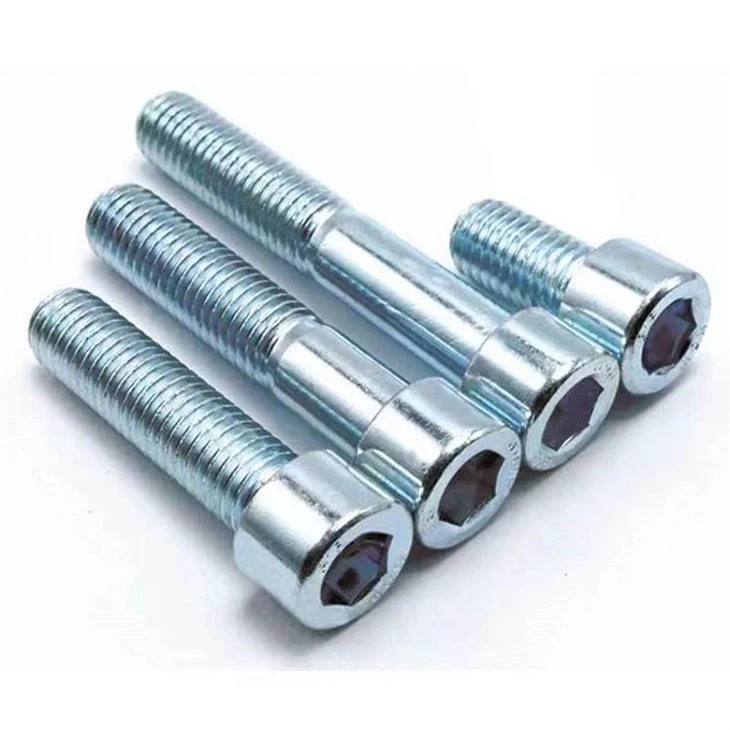
- Hex Cap Screw Din 912: These hex cap screws are known for their high precision and reliability. The microstructure of the Bolt Grade 8.8 steel used in these screws gives them excellent fatigue resistance, making them suitable for applications where they will be subjected to repeated loading.
Why Choose Us as Your Bolt Grade 8.8 Supplier
As a supplier, we understand the importance of providing high-quality bolts with consistent properties. That's why we use advanced manufacturing processes and strict quality control measures to ensure that our Bolt Grade 8.8 bolts have the optimal microstructure. We also offer a wide range of products to meet your specific needs, from standard bolts to custom-made solutions.
If you're in the market for Bolt Grade 8.8 bolts or any of our other products, I encourage you to get in touch with us. We'd be happy to discuss your requirements and provide you with a quote. Whether you're working on a small DIY project or a large-scale industrial application, we have the expertise and products to help you succeed.
References
- ASM Handbook Volume 1: Properties and Selection: Irons, Steels, and High-Performance Alloys.
- Materials Science and Engineering: An Introduction by William D. Callister Jr. and David G. Rethwisch.