


Hebei Mitu Trading Co.,Ltd. was established in 1998, is a large and professional manufacture of high-strength fasteners, and is located in Yongnian County, Handan City, Hebei Province, China. Main product standards: German standard (DIN), American standard (ANSI/ASTM), British standard (BS), China national standard (GB), and other international standards. Product mechanical performance levels cover 4.8, 8.8, 10.9, 12.9, etc.
Why Choose Us
High Quality
Our products are manufactured or executed to very high standards, using the finest materials and manufacturing processes.
Factory
In line with the tenet of "quality first, credibility first, service first", we always develop with the goal of "creating the best supplier".
24h Online Service
Our terms of work have always been fixed within the work process and one can be assured about the guarantee of the work as we are there 24/7 business hours during the time your project is being worked is on.
Rich Experience
Our company has many years of production work experience. The concept of customer-oriented and win-win cooperation makes the company more mature and stronger.

Hex bolt Din 933 Cl 8.8 is a high-strength bolt commonly used in engineering and construction applications. Its mechanical properties, including tensile strength and yield strength, are crucial in ensuring the safety and stability of the structures it is used in.

Hex bolt Din 931 and are a partially threaded fastener with a hexagon-shaped head that is usually fixed with a spanner or socket tool. Hosting a machine thread, these bolts are suitable for use with either a nut or within a pre-tapped hole.

Hex bolt Din 933 /ISO 4017 are fully threaded, have external coarse machine screw threads and, like other hex head screws, are used with both tapped holes and nuts. Length is measured from under the head to the tip.

High Strength Hex Bolt Din 931 Cl 8.8
High strength hex bolt Din 931 Cl 8.8 are made of high-strength steel, or bolts that require a large pre-tightening force. The application areas include bridges, rails, and the connection of high-pressure and ultra-high pressure equipment.

High Strength Hex Bolt Din 933 Cl 8.8
High strength hex bolt Din 933 Cl 8.8 are pre-stressed bolts. The friction type uses a torque wrench to apply the specified pre-stress, and the pressure-bearing type unscrews the plum head. Ordinary bolts have poor shear resistance and can be used in secondary structural parts. Ordinary bolts only need to be tightened.
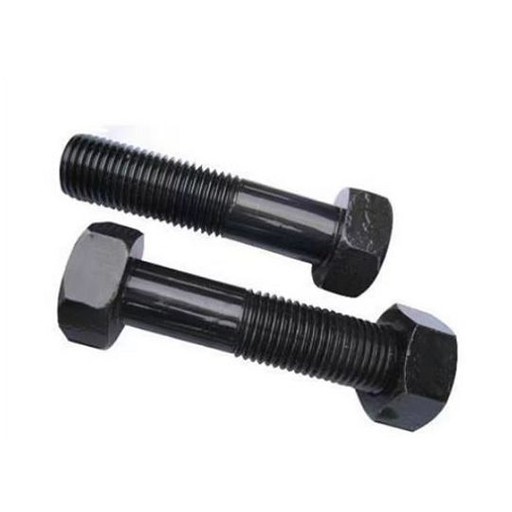
Hex bolt Din 931 Cl 8.8 is a high-quality and durable bolt designed to withstand heavy duty applications. Made from premium materials, this bolt is capable of providing exceptional strength and reliability, ensuring your projects are secure and stable. With its unique hexagonal shape

High Strength Hex Cap Screw Din 912
They host a hexagonal recess and are driven using an insert bit or a hex wrench, making the screws more efficient than the slotted screw products. This is due to the hex socket drive having more resistance to cam out.

Hex Cap Screw Din 912 bolts are also called cup-head hexagon socket bolts. The shape is cylindrical head and the groove is hexagon socket polygon. Hexagon socket head bolts are widely used in mechanical installation because they are easy to fasten and disassemble, and are not easy to slip.

The hex bolt galvanized has the six sided hexagonal shaped head. This is a machine threaded bolt typically used with a nut or in a pre-threaded hole. The length of a hex bolt is determined by measuring from under the head of the bolt to the base of the threads.
The hex bolt galvanized has the six sided hexagonal shaped head. This is a machine threaded bolt typically used with a nut or in a pre-threaded hole. The grade 2 hex bolts are a low or medium carbon steel, externally threaded bolt that has been hot dipped galvanized to provide superior anti-corrosive protection while being used in highly corrosive environments. The length of a hex bolt is determined by measuring from under the head of the bolt to the base of the threads.
Advantages of Hex Bolt Galvanized
High torque capacity
Hex bolt galvanized, with their six-sided heads, provide a larger contact area for wrenches or socket tools. This design allows for higher torque application and better grip during installation and removal.
Durable
Hex bolt galvanized are highly durable and resistant to corrosion, wear, and other forms of damage. This is because they are often made from high-strength materials, and can be coated with a variety of finishes to enhance their corrosion resistance.
Secure fastening
When properly tightened with the appropriate tools, hex bolt galvanized offer reliable and secure fastening, reducing the risk of loosening or vibration-related failures. Hex bolt galvanized conform to industry standards, ensuring compatibility with a wide range of nuts, washers, and other hardware components.
Versatility
Hex bolt galvanized are versatile and widely used in a variety of applications. They are commonly used in construction, automotive, aerospace, and many other industries. This versatility comes from the fact that hex head bolts are available in a wide range of sizes and materials, and can be used in both high and low-load applications.
Difference Between Hex Bolt Galvanized & Hex Head Cap Screws
While most people think of these parts as being the same, they do have some subtle differences. Hex head screws have a flat washer under the head, while hex bolt galvanized are flat under the head. Hex cap screws also have tighter tolerances on the body dimensions and a chamfered end while hex bolt galvanized have a flat end.
Galvanization is the process of applying a layer of zinc to the surface of carbon steel bolts to protect them from corrosion. This zinc coating acts as a barrier, preventing the bolt from coming into direct contact with water, oxygen, and other corrosive elements in the environment. As a result, galvanization not only creates a physical barrier but also protects the underlying carbon steel through cathodic protection, where the zinc is more easily corroded, thereby protecting the steel. The zinc layer forms an effective shield that prevents corrosive elements from attacking the bolt's surface. The galvanization process effectively slows down the natural corrosion process of bolts, especially those used in humid, rainy, or highly corrosive environments.
How do you Properly Tighten a Hex Bolt Galvanized?
Preparation
Make sure you have the appropriate tools for the job, including the correct size wrench or socket. Ensure the threads of the bolt and the nut are clean and free from debris.
Choose The Right Torque
Refer to the specifications or engineering guidelines to determine the recommended torque value for the specific bolt size and material. This information ensures that the bolt is tightened to the appropriate level without over-tightening.
Use A Torque Wrench
A torque wrench is a precision tool that measures the amount of force applied to the bolt. It helps you achieve the desired torque accurately. Set the torque wrench to the recommended torque value. Make sure the wrench is properly calibrated.
Tightening Sequence
If there are multiple bolts in the joint, follow the recommended tightening sequence provided by the engineering standards. This sequence ensures even load distribution and prevents distortion of components.
Initial Tightening
Place the wrench or socket onto the bolt head or nut. Apply gradual and steady force to begin tightening the bolt. Use one hand to hold the wrench and the other hand to support the handle, maintaining control over the torque application.
Apply Torque
As you turn the wrench, apply force until you feel the wrench "click" or indicate that the recommended torque has been reached. Avoid sudden jerks or excessive force, as this could lead to over-tightening.
Check Torque
For critical applications, where precise torque is crucial, it's advisable to perform multiple passes. After the initial tightening, go through the sequence again, applying torque until the desired value is reached. Proper torque application ensures that the bolt maintains the appropriate clamping force for the intended purpose, contributing to the longevity and reliability of the fastened joint.
Verify The Joint
After tightening, inspect the joint to ensure that it is secure, aligned, and free from any misalignments or irregularities. Remember that over-tightening can damage threads, deform components, or even cause failure. Under-tightening, on the other hand, may lead to joint instability.
Material of Hex Bolt Galvanized
Hex bolt galvanized come in various materials and finishes, such as stainless steel, carbon steel, and more, which allows them to be used in different environments and scenarios.
Components of Hex Bolt Galvanized
Hex bolt galvanized, commonly called hex head cap screws, are bolts that contain a hexagonal head, smooth shank, and threads. The length of the threads ranges from 1" to 6", depending on the diameter and length of the bolt.
Application of Hex Bolt Galvanized
Hex bolt galvanized are commonly used in construction applications, such as framing, roofing, and concrete forms. They can be used to fasten wood, metal, and other materials together securely.
Hex bolt galvanized are used extensively in automotive applications, such as engine assembly, suspension components, and body panels. They are often made from high-strength materials to withstand the stresses and vibrations of driving.
Hex bolt galvanized are used in many types of machinery, from small hand tools to large industrial equipment. They can be used to fasten components together, or to attach machinery to a stable base.
Hex bolt galvanized are used to secure electrical panels and other equipment in place. They are often made from non-conductive materials to prevent electrical shorts.
Hex bolt galvanized are used to fasten pipes and fittings together in plumbing applications. They can be made from materials that are resistant to corrosion and chemical damage.
Many other industries and applications also benefit from stainless steel hex bolt galvanized, including: Chemical Processing. Chemical reactors, storage tanks, pipes, and valves require high resistance to chemical corrosion. They are used in a variety of applications where chemical exposure is a concern, such as in the chemical or pharmaceutical industries, or in environments where corrosive substances are present.
How Do Hex Bolt Galvanized Work?
Hex bolt galvanized can be used either in pre-tapped holes or with nuts, depending on the application. They can then be tightened using a range of tools including a hex bolt wrench, socket sets, spanners, hex keys, and ratchet spanners. The hexagon-shaped head ensures that it is easy to grip hex bolt galvanized from multiple angles, using different types of tool. This makes their installation and removal a straightforward process, plus ensuring it is also easy to loosen or tighten hex bolt galvanized once they are in situ.
How to Maintain Hex Bolt Galvanized
First, it's important to inspect your hex bolt galvanized regularly. Look for signs of wear and tear, such as rust, corrosion, or damage to the threads. If you find any of these, it's best to replace the bolt. Second, make sure to use the right tools when tightening or loosening hex bolt galvanized. Using the wrong tools can damage the threads, which can lead to the bolt becoming loose or even breaking. Use a lubricant when tightening or loosening hex bolt galvanized. This will help reduce friction and make it easier to tighten or loosen the bolt. It will also help protect the threads from damage. Use the correct torque when tightening or loosening hex bolt galvanized. Too much torque can damage the threads, while too little torque can cause the bolt to become loose. Finally, store your hex bolt galvanized in a dry, cool place. This will help prevent rust and corrosion, which can damage the threads and reduce the bolt's effectiveness.
Things to Note When Using Hex Bolt Galvanized
Correct Installation
During the installation process, pay attention to using the correct tools and correct installation methods. Hex bolt galvanized usually need to be tightened with a wrench. The force should be even and not too tight or too loose. Also, use the correct washers and nuts to ensure the connection is tight and secure.
Avoid Over-tightening
Be careful when using hex bolt galvanized. Over-tightening may cause the bolts to break or the connections to be damaged. You can use a suitable torque wrench to control the force and ensure that the tightening force is within a reasonable range.
Prevent Wear And Corrosion
During use, pay attention to avoid wear and corrosion on the hex bolt galvanized surface. In humid environments, use corrosion-resistant bolt materials or perform surface anti-corrosion treatments. At the same time, store and use it correctly to avoid contact with corrosive chemicals.
Regular Inspection
Regularly check the tightening of hex bolt galvanized connections to ensure there is no looseness. Especially connections under high load and vibration environments should be checked frequently.
How do you Remove Hex Bolt Galvanized?
If the head of the hex bolt galvanized is slightly stripped but still has some flat edges, you can use pliers or Vise-Grips to grip the sides of the bolt head and turn it counterclockwise to remove it. An impact driver is a powerful tool that delivers strong rotational force to loosen stubborn bolts. Attach a hex bit to the impact driver and apply firm pressure to turn the bolt counterclockwise. If all else fails, you may need to drill out the stripped hex bolt galvanized. Start with a small drill bit and gradually increase the size until you can remove the bolt with pliers or Vise-Grips. Be careful not to damage the surrounding material, and use eye protection and a dust mask when drilling.
Certifications


FAQ
Q: Can hex bolts be galvanized?
Q: Can A325 hex bolts be galvanized?
Q: What is the difference between galvanized and zinc hex bolts?
Q: How do you prevent cross-threading when installing hex bolt galvanized?
Q: What hex bolts to use with galvanised steel?
Q: Can you use regular nuts on galvanized hex bolts?
Q: Which hex bolt is stronger zinc or galvanized?
Q: How can you tell if a hex bolt is galvanized?
Q: How Aluminium Corrodes with Galvanised Steel?
Q: How do you remove a hex bolt galvanized?
Q: How do you remove a hex bolt galvanized without a screwdriver?
Q: What tool do you use for hex bolt galvanized?
Q: What is the difference between a hex screw and a hex bolt galvanized?
Q: Is a hex bolt galvanized the same as an Allen bolt?
Q: Are hex bolt galvanized fully threaded?
Q: Why use hex bolt galvanized?
Q: Are hex bolt galvanized strong?
Q: What is the strongest hex bolt galvanized?
Q: Why are bolts hex and not square?
Q: How do you tighten a hex bolt galvanized?
Hot Tags: hex bolt galvanized, China hex bolt galvanized manufacturers, suppliers, factory, Hex Bolt Din 933 Cl 8 8, , , , Wear Resistant Steel Plate